Sectional Title Registration Johannesburg Guide
Understanding sectional title registration Johannesburg is crucial for property owners and developers alike. This guide will walk you through the entire process. Sectional titles offer a unique form of property ownership. They combine private ownership of a specific unit with shared ownership of common property. This structure is very popular in urban centers like Johannesburg.
A sectional title scheme allows for individual ownership of a section. This section could be an apartment, townhouse, or office. It also grants an undivided share in the common property. Common property includes areas like gardens, swimming pools, and access roads. The Sectional Titles Act 95 of 1986 governs these schemes in South Africa. It sets out the rules for establishment, management, and dissolution.
What is a Sectional Title Scheme?
A sectional title scheme divides a building or land into sections. Each section has its own owner. The remaining parts are common property. All owners collectively own this common property. A Body Corporate manages the common property. This Body Corporate consists of all the sectional title owners. They elect trustees to handle daily operations. These schemes are ideal for high-density living. They offer a sense of community and shared responsibility.
This ownership model differs significantly from freehold property. With freehold, you own both the land and the building. Sectional title ownership focuses on the unit and a share of the common areas. This distinction is vital for understanding your rights and responsibilities. It impacts everything from maintenance to renovations. Knowing these differences is key before buying.
Benefits of Sectional Title Ownership
Sectional title properties offer several advantages. Often, they are more affordable than freehold homes. This makes them an attractive entry point into the property market. Maintenance of common areas is shared among owners. This reduces the financial burden on any single individual. Security is often enhanced in sectional title complexes. Gated communities and shared security services are common features.
Lifestyle benefits are also significant. Many schemes include amenities like pools, gyms, and clubhouses. These are accessible to all residents. The Body Corporate handles much of the external maintenance. This frees up owners from tasks like gardening and exterior painting. This can lead to a more relaxed living experience. Investment potential can also be strong in well-managed schemes.
Understanding the Registration Process
The registration process is a legal procedure. It formally establishes a sectional title scheme. This involves several steps with the Deeds Office. The process ensures all legal requirements are met. It grants individual owners their title deeds. This makes their ownership official and legally binding. Understanding each stage is important. It helps ensure a smooth transaction. Delays can be costly and frustrating for all parties involved.
Typically, a land surveyor and an attorney are central to this process. The surveyor drafts the sectional plans. The attorney handles the legal submission to the Deeds Office. Their expertise is invaluable. They ensure compliance with all relevant laws. Proper documentation is paramount at every stage. Errors can lead to significant setbacks. Therefore, careful preparation is essential.
Key Steps in Sectional Title Registration Johannesburg
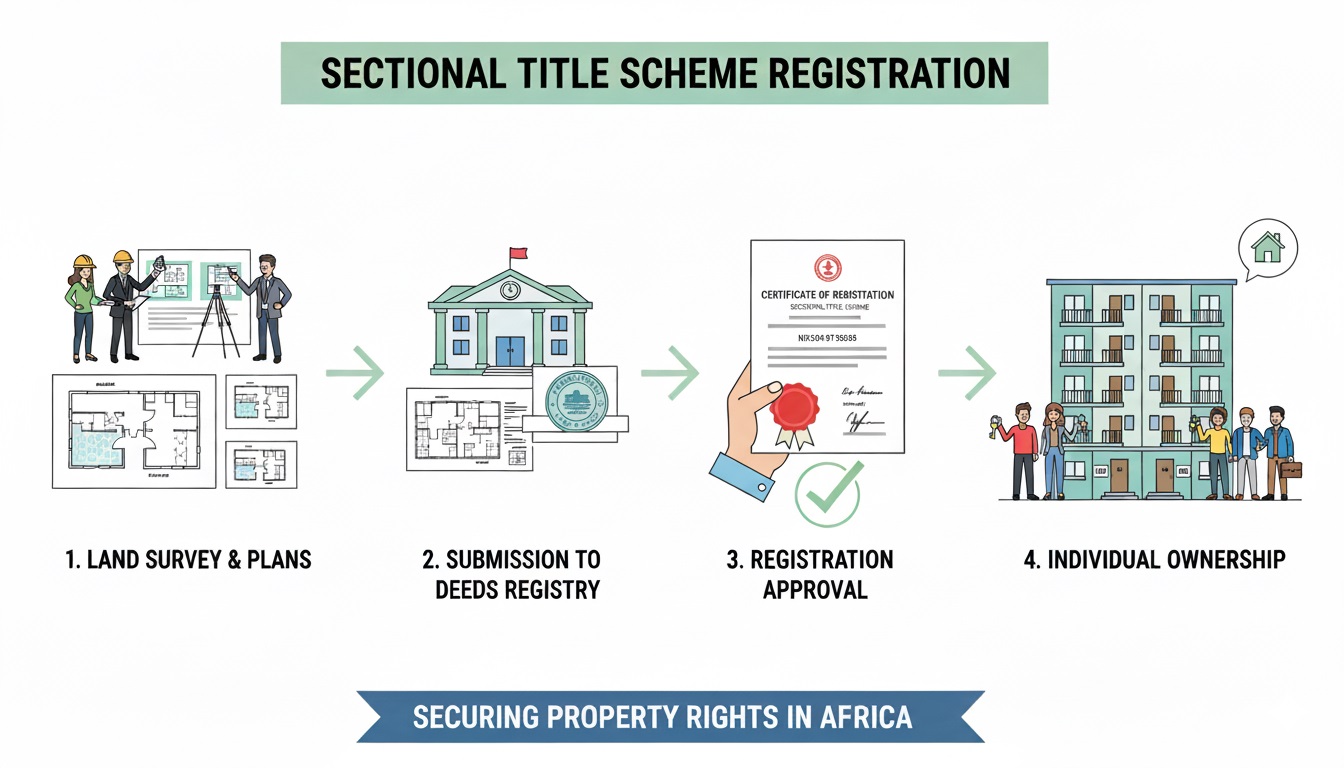
The journey to sectional title registration Johannesburg begins with planning. First, a land surveyor prepares a draft sectional plan. This plan details each section and the common property. It includes precise measurements and boundaries. This draft is then submitted to the Surveyor-General for approval. This step ensures accuracy and compliance with technical standards.
Once approved, the conveyancing attorney takes over. They prepare all the necessary legal documents. These include the opening of a sectional title register. They also draft the management and conduct rules for the Body Corporate. These rules govern how the scheme will operate. They cover everything from pet policies to levy payments. All documents are then lodged with the Deeds Office. The Deeds Office will then examine them thoroughly. This ensures they meet all legal requirements. Finally, if all is in order, the scheme is registered. Individual title deeds are then issued to the owners. This marks the official establishment of the sectional title scheme.
Required Documents for Registration
Several critical documents are needed for sectional title registration. These include the approved sectional plan from the Surveyor-General. The developer must provide a complete schedule of various matters. This includes the participation quotas for each unit. A conveyancer’s certificate is also required. This confirms compliance with the Sectional Titles Act. Furthermore, the developer’s existing title deed for the land is essential. Any existing bonds over the property must also be cancelled or endorsed. This ensures clear title for the new scheme. All these documents ensure the legality and proper structure of the scheme.
The management and conduct rules are also vital. These rules dictate how the scheme functions day-to-day. They cover financial aspects, maintenance, and resident behavior. These rules are lodged with the Deeds Office. They become legally binding on all owners. Careful drafting of these rules is paramount. They help prevent future disputes among residents. It is advisable to review these documents thoroughly. Ensure they align with your expectations for the scheme.
Costs Involved in Sectional Title Registration
Several costs are associated with sectional title registration. These typically include conveyancing fees. These fees are paid to the attorney handling the registration. There are also Deeds Office fees. These are charges for the actual registration of the scheme. Surveyor-General fees are incurred for the approval of the sectional plans. Stamp duty may also apply in certain circumstances. Additionally, developers might face costs related to professional consultants. This includes land surveyors and architects.
It is important to obtain a detailed breakdown of all costs upfront. This helps in budgeting and avoiding surprises. These costs are usually borne by the developer during the initial setup. However, individual buyers will incur their own transfer costs. This includes transfer duty and conveyancing fees. These are paid when they purchase a unit within the scheme. Understanding these financial aspects is key for both parties.
Choosing the Right Professionals
Selecting experienced professionals is crucial, Glensburg Town Planners excels. A qualified land surveyor ensures accurate sectional plans. Their expertise prevents future boundary disputes. A reputable conveyancing attorney is equally important. They navigate the complex legal landscape. They ensure all submissions to the Deeds Office are correct. Look for professionals with a proven track record. Experience in sectional title developments is a definite plus. Their guidance can save significant time and money.
Always ask for references and check qualifications. Ensure they are registered with their respective professional bodies. Good communication is also vital. You need professionals who can explain the process clearly. They should keep you informed at every stage. The success of your sectional title scheme largely depends on their competence. For general property legal matters, understanding processes like rezoning application costs can also be beneficial.
Common Challenges and How to Overcome Them
Sectional title registration can face various challenges. Delays are common due to administrative backlogs at the Deeds Office. Incomplete or incorrect documentation can also cause setbacks. Disputes among developers or land owners can halt progress. Navigating these issues requires patience and expertise. Thorough preparation is the best defense against delays. Double-checking all documents before submission is critical.
Engaging proactive professionals can mitigate many risks. They can anticipate potential problems. They can also offer solutions before issues escalate. Clear communication among all parties is also vital. This includes developers, surveyors, attorneys, and the Deeds Office. Addressing concerns promptly helps keep the process on track. A collaborative approach yields the best outcomes.
Why Johannesburg?
Johannesburg is a prime location for sectional title schemes. Its growing urban population drives demand for diverse housing. The city’s economic hub status attracts many residents. Sectional titles offer convenient, secure living options. They cater to various budgets and lifestyles. From bustling city centers to quiet suburbs, options abound. This variety makes Johannesburg an attractive market for developers. It also appeals to those seeking property ownership.
The city’s infrastructure supports high-density living. Access to amenities, transport, and employment is excellent. These factors contribute to the appeal of sectional title properties. The demand ensures a vibrant property market. Investment in sectional title schemes here can be very rewarding. The continuous development means new opportunities are always emerging. This makes sectional title registration Johannesburg a dynamic field.
Conclusion
Sectional title registration Johannesburg is a detailed but rewarding process. It enables a popular form of property ownership. Understanding each step ensures a smooth journey. From initial planning to final title deed issuance, every stage matters. Engaging experienced professionals is key to success. This guide provides a solid foundation. It helps navigate the complexities with confidence. Proper registration ensures security and clarity for all owners.
